
166-3 Comparison
| photo | price | summary | rating |
|---|---|---|---|
 | $9.95 | Condition is Good, FREQUENCY MODULATION 166-3 1955 PB 1st Edition Review Series Rider Publications, shipping cost = $4.47 | 100.0% |
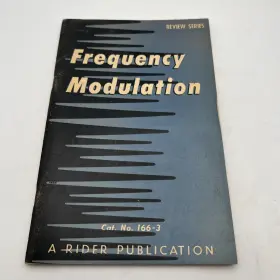
Rider 166-3: A Comprehensive Study on Frequency Modulation, Published by IEEE Press in 1955
The Rider 166-3 book, published by the Institute of Electrical and Electronics Engineers (IEEE) Press in 1955, is a seminal work in the field of frequency modulation (FM) communication. This book, authored by H.C. Rider, is an essential read for engineers, researchers, and students seeking a deep understanding of the fundamental principles and applications of FM technology.
The book begins by providing a historical background of FM communication, outlining its origins and early developments. Rider then delves into the theoretical foundations of FM, explaining the mathematical principles underlying modulation, demodulation, and detection. He discusses various types of FM systems, including amplitude-modulated (AM) to FM conversion, single-sideband (SSB) FM, and wideband FM.
Rider also explores the practical design aspects of FM communication systems, such as modulators, filters, and amplifiers. He discusses the importance of frequency response, linearity, and distortion in FM systems and provides design equations and circuit diagrams to help readers build and optimize their own FM systems.
The book further covers advanced topics in FM communication, such as frequency-agile systems, adaptive modulation, and noise reduction techniques. It also includes a detailed analysis of the psychological and perceptual aspects of FM radio, making it an invaluable resource for broadcasters and audio engineers.
Throughout the book, Rider provides numerous examples, illustrations, and practical exercises to help readers grasp the concepts and apply them to real-world problems. The text is supplemented with a comprehensive bibliography, allowing readers to explore the literature further and stay updated on the latest research in FM communication.
In summary, the Rider 166-3 book is an indispensable resource for anyone interested in the theory and practice of frequency modulation communication. Its clear, concise, and detailed explanations, coupled with practical examples and exercises, make it an ideal text for students, researchers, and professionals in the field of electrical engineering, communications engineering, and radio technology.
A Discourse on the Pros and Cons of purchasing a Rider 166-3 Frequency Modulation Handbook (1955 Publication)
Introduction:The Rider 166-3 Frequency Modulation Handbook, published by Rider & Co. in 1955, is a classic engineering document that provides in-depth information on the design, implementation, and optimization of frequency modulation (FM) communication systems. While the technology described in the handbook is now decades old, it still holds valuable insights for modern communication engineers and hobbyists. In this discourse, we will weigh the pros and cons of purchasing this vintage publication.
Pros:1. Historical Significance: The Rider 166-3 Handbook offers a unique perspective on the development of FM communication technology in its early days.
2. Practical Applications: The comprehensive coverage of FM theory, design, and implementation makes it a valuable resource for hobbyists and engineers working on FM projects.
3. Cost-Effective: Given its age, the handbook is relatively inexpensive compared to modern textbooks and online resources.
4. Durable: Being a physical book, it is less susceptible to the digital obsolescence that often plagues online resources.
Cons:1. Outdated: The technology described in the handbook is now decades old, and many of the specific components and designs mentioned are no longer in use.
2. Limited Scope: The handbook primarily focuses on FM communication systems and does not cover other related topics such as digital modulation, error correction, or network architectures.
3. Size and Weight: As a physical book, it occupies more space and is less portable than digital resources.
Conclusion:In conclusion, the Rider 166-3 Frequency Modulation Handbook offers a unique blend of historical significance, practical applications, and cost-effectiveness that makes it an attractive addition to any communication engineer's or hobbyist's library. Although it has its limitations, such as outdated technology and limited scope, the wealth of knowledge it contains more than justifies its purchase.
Recommendation:If you are a communication engineer or hobbyist with an interest in the history of FM communication technology and a desire to gain a deep understanding of the fundamental principles of FM design and implementation, the Rider 166-3 Frequency Modulation Handbook is an excellent investment. It is important to note that this recommendation is based on the unique value proposition of the handbook as a historical and educational resource, rather than as a practical guide for modern communication systems design.
Details:
This book is a valuable resource for vintage audio and video enthusiasts, providing insights information on electronics. The product is a vintage 1955 1st edition review series book titled frequency modulation 166-3 by Rider publications.
specifications vintamanual:
- brand: Rider
- mpn: 166-3
- country of origin: United States
seller vintamanual:
- city: sacramento, california
- rating: 100.0%
- # reviews: 482
offer vintamanual:
- sold #: 9
- in stock #: 1
- started: december 30, 2025
- options: ship-to-home
- best offers: true
- availability: in stock
- price: $9.95
- item condition: Good
payments vintamanual:
- wallet: apple-pay
- other
- credit card: mastercard
shipping vintamanual:
- carrier: usps
- class: economy
- type: calculated
- service: usps media mail
- transit: 4-9 days
returns vintamanual:
- policy: no returns
general vintamanual:
- category: Electronics > Audio Video > Parts Accessories > Vintage Manuals