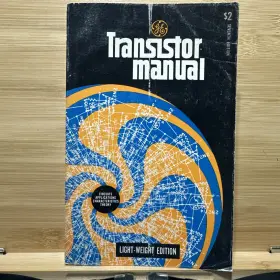
GE 850M Transistor Manual - 7th Circuit Theory (1964)
The General Electric (GE) 850M Transistor Manual - 7th Circuit Theory, published in 1964, is an essential resource for engineers and electronics enthusiasts working with or studying transistor circuits. This manual focuses on the theoretical aspects of the seventh circuit of the GE 850M transistor, providing a detailed and comprehensive understanding of its operation.
The document begins by introducing the 850M transistor, its specifications, and applications. It then delves into the seventh circuit, which is specifically designed for voltage amplification. The manual explains the internal structure of the transistor, including the NPN and PNP types, and discusses the relationships between various electrical parameters such as current, voltage, and resistance.
The seventh circuit theory section covers the common emitter, common collector, and common base configurations. For each configuration, the manual provides a detailed analysis of the circuit's operation, including the input-output characteristics, AC and DC small-signal parameters, and power dissipation. The analysis also covers the effects of biasing and temperature on the circuit performance.
The manual includes numerous diagrams, graphs, and equations to illustrate the concepts and facilitate the understanding of the theoretical concepts. It also provides troubleshooting guidelines and suggestions for improving the circuit's performance.
In summary, the GE 850M Transistor Manual - 7th Circuit Theory (1964) is a valuable resource for anyone interested in the theoretical aspects of transistor circuits, particularly the seventh circuit of the GE 850M transistor. Its clear and detailed explanations, along with the numerous diagrams and equations, make it an excellent reference for engineers, students, and electronics enthusiasts.
A Discourse on the Pros and Cons of Acquiring a GE 850M Transistor Manual (7th Circuits Theory, 1964)
I. IntroductionThe GE 850M Transistor Manual (7th Circuits Theory, 1964) is a historical document that provides valuable insights into the transistor theory and its application during the early stages of solid-state electronics. This manual, published by General Electric Company, can be an essential resource for hobbyists, historians, and professionals interested in vintage electronic equipment or the history of technology. In this discourse, we will explore the advantages and disadvantages of acquiring this manual to help readers make an informed decision.
II. Pros of buying a GE 850M Transistor Manual1. Historical Significance: The manual offers a glimpse into the past, providing valuable information on the development of transistor technology and its application in various electronic circuits.
2. Practical Learning: The theoretical knowledge presented in the manual can be applied to build and troubleshoot vintage electronic devices or even serve as a foundation for designing modern circuits.
3. Rare and Collectible: As a historical document, the GE 850M Transistor Manual is a rare and collectible item for those interested in electronic history and technology.
4. Affordability: Compared to modern textbooks or educational resources, the manual is relatively affordable, making it an accessible option for hobbyists and students.
III. Cons of buying a GE 850M Transistor Manual1. Limited Relevance: The theoretical concepts and design techniques presented in the manual may not directly apply to modern electronic systems, limiting its practical use for some.
2. Complexity: The manual assumes a certain level of understanding of electrical engineering concepts, making it challenging for beginners or those without a solid foundation in electronics.
3. Availability: Due to its age, the manual may be difficult to find in physical or digital formats, requiring significant effort and resources to acquire.
IV. ConclusionThe decision to acquire the GE 850M Transistor Manual (7th Circuits Theory, 1964) depends on an individual's interest in electronic history, vintage technology, and the depth of their knowledge in electrical engineering. While the manual offers historical significance, practical learning opportunities, and affordability, it may also present limited relevance, complexity, and availability challenges.
V. RecommendationFor those with a strong foundation in electrical engineering and a passion for vintage electronics and technology, the GE 850M Transistor Manual (7th Circuits Theory, 1964) is an invaluable resource. However, for beginners or those looking for a more modern and directly applicable learning resource, it may be worth considering alternative textbooks or educational materials. Ultimately, the decision to acquire this manual should be based on an individual's specific interests, goals, and the resources available to them.
Details:
I do a thorough visual check of each book, noting any wear, damage, or markings so buyers know exactly what they're Getting. This way, you can see the condition, content, and layout before purchasing. Ge transistor manual 7th edition circuits applications, published by in 1964 this book contains theories and applications transistors/circuits/other electronic parts. To Get full understanding see tic and sample pages in photos, what you is exactly what.
Every book I list is in my possession and personally inspected by me.
specifications vintamanual:
- brand: Ge
- mpn: 850m
- part type: Manual
- platform: Transistors Semiconductor
- full company: General Eletric
- country/region of manufacture: United States
payments vintamanual:
- credit card: diners-club
- other
- wallet: apple-pay
returns vintamanual:
- time: 30 days
- method: money back
- paid by: buyer
- policy: returns accepted
general vintamanual:
- category: Electronics > Audio Video > Parts Accessories > Vintage Manuals
seller vintamanual:
- # reviews: 1487
- city: newtonville, massachusetts
- rating: 99.6%
offer vintamanual:
- availability: in stock
- prices: $5.99–$149.99
- item condition:
- Very Good
- Good
- Acceptable
- Used
- Unspecified
- New
- Brand New
- in stock #: 5
- options: ship-to-home
- sold #: 14
- started: june 11, 2025
- best offers: true
shipping vintamanual:
- transit: 3-9 days
- service: usps media mail
- type: calculated
- carrier: usps
- class: economy
Similar Items:
- 1Q56-113-01A: VIDEO CASSETTE RECORDER MANUAL, Ge Videocassette Recover Vg 500
- 164D3333P116-1: MANUAL, Ge
- 8001: TAPE RECORDER MANUAL, Ge
- LBI-3025B: MANUAL, Ge
- VQTW0271: VIDEO CAMERA MANUAL, Ge
- 318A7698-11: CASSETTE TAPE MANUAL, Ge
- 3-5463: TAPE PLAYER MANUAL, Ge
- 25922: , Ge
- 29-9824-84: CD DISC PLAYER MANUAL, Ge
- G42K: GRILL MANUAL, Ge
- 4311N-2-77: MANUAL, Ge